<script type="application/ld+json"> { "@context": "https://schema.org", "@type": "FAQPage", "mainEntity": [ { "@type": "Question", "name": "What makes Finnish education different from traditional schooling?", "acceptedAnswer": { "@type": "Answer", "text": "Finnish education prioritizes holistic development over test scores. Children learn through play and exploration. Teachers mentor rather than lecture. Well-being matters as much as academics." } }, { "@type": "Question", "name": "Can school-ready children still perform well academically?", "acceptedAnswer": { "@type": "Answer", "text": "Absolutely. Research shows that experiential learners score higher on standardized tests. They also demonstrate superior problem-solving skills and knowledge retention compared to traditionally taught students." } }, { "@type": "Question", "name": "How do I identify quality schools in Nallagandla?", "acceptedAnswer": { "@type": "Answer", "text": "Visit campuses and observe classrooms directly. Check student-teacher ratios. Talk to current parents. Notice whether children seem engaged and confident. These indicators reveal educational quality." } }, { "@type": "Question", "name": "At what age should children start formal education?", "acceptedAnswer": { "@type": "Answer", "text": "Finland delays formal schooling until age seven with excellent results. Early years benefit most from play-based learning. Rushing formal education can increase stress without improving outcomes." } } ] } </script>

Why Parents Choose HEWS
Is Your Child School-Ready or Just Exam-Ready?
Your child knows the multiplication tables. But can they solve real problems? This question keeps many Nallagandla parents awake at night. Schools everywhere promise academic excellence. Yet something feels incomplete. High marks look impressive on report cards. But what about critical thinking? What about adaptability?
The truth is simple. Being exam-ready and being school-ready are completely different achievements. One prepares your child for tests. The other prepares them for life. Among the many schools in Nallagandla, this distinction matters more than ever.
The Exam-Ready Trap: Why High Scores Aren't Enough
Traditional education systems focus heavily on memorization. Children learn formulas, dates, and definitions. They practice solving repetitive problems. Test scores become the only measure of success.
This approach creates exam-ready students. They perform well on standardized tests. Yet they struggle when faced with unfamiliar situations. Research from the OECD shows that students who excel in rote learning often lag in problem-solving skills.
Many schools in Nallagandla still follow this outdated model. Parents notice the pressure building. Children feel anxious about every mark. The joy of learning gets lost somewhere between coaching classes and practice papers.
What School-Ready Really Means
School-ready children possess something different. They're curious about the world around them. Questions come naturally to them. They can work with others effectively. Setbacks don't discourage them: they learn from failures.
The World Economic Forum identifies crucial skills for future success:
Complex problem-solving
Critical thinking and analysis
Creativity and innovation
Emotional intelligence
Collaboration and teamwork
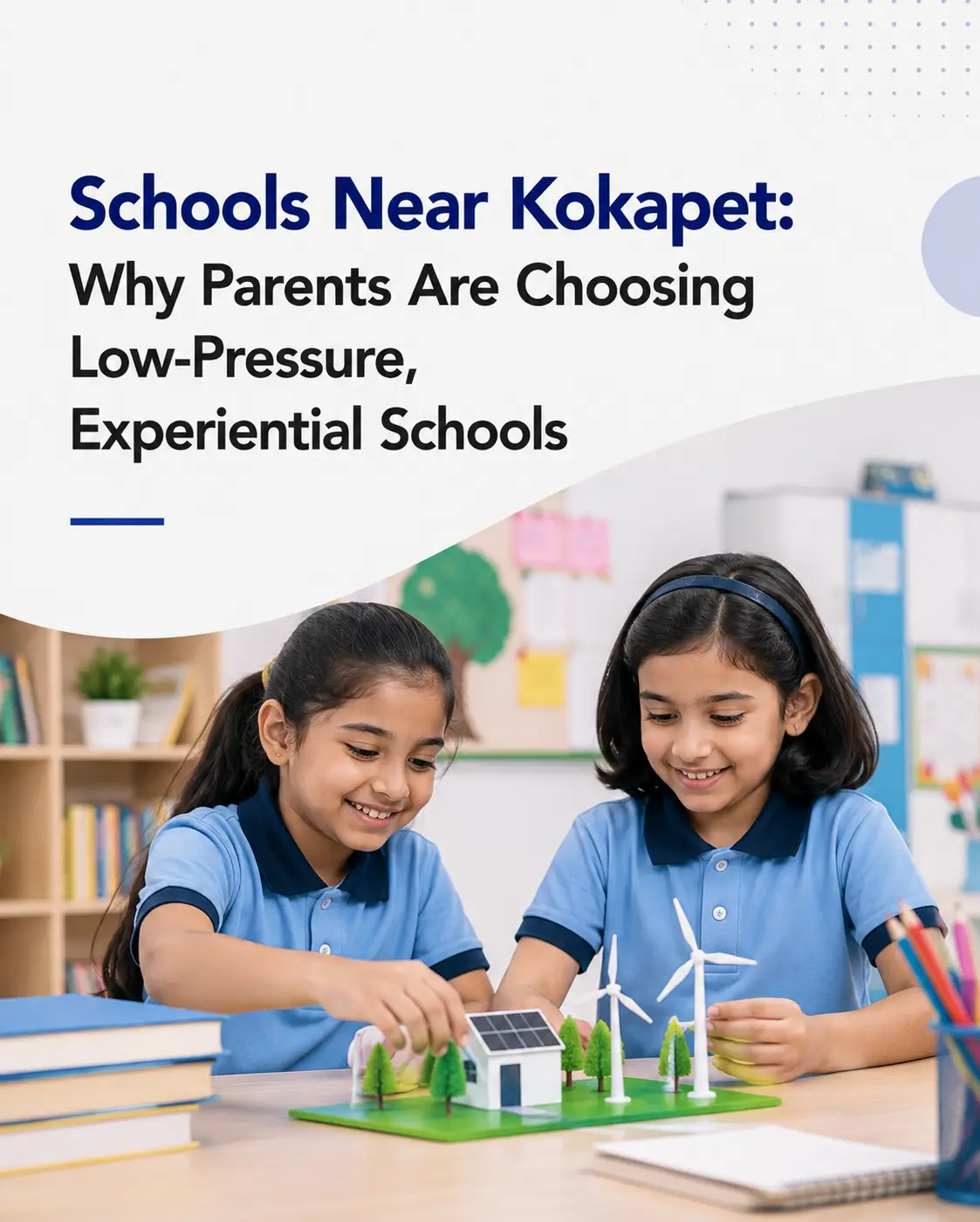
These abilities can't be taught through textbooks alone. Children need hands-on experiences. They need room to explore and make mistakes. Progressive schools in Nallagandla are beginning to recognize this truth.
The Finnish Difference: Learning Without Pressure
Finland consistently ranks among the world's top education systems. Yet Finnish children don't start formal schooling until age seven. They have minimal homework. Standardized testing is rare.
How do they achieve such remarkable results? The Finnish model focuses on holistic development. Play-based learning dominates early years. Children learn through real-world projects and exploration. Teachers act as mentors rather than lecturers.
Some forward-thinking schools in Nallagandla are adopting these proven principles. They understand that childhood isn't a race. Development happens naturally when children feel safe, curious, and supported.
Key Elements of the Finnish Approach
Less is more: Finnish schools prioritize depth over breadth. Children explore fewer topics but understand them thoroughly. Quality trumps quantity every time.
Teacher autonomy matters: Educators have the freedom to design learning experiences. They adapt teaching methods to individual student needs. This flexibility creates more engaging classrooms.
Well-being comes first: Students get regular breaks and outdoor time. Stress reduction isn't optional: it's essential. Happy children learn better than anxious ones.
Making the Shift in Nallagandla
Parents searching for schools in Nallagandla face an important choice. Do you want your child to be exam-ready or school-ready? The right answer isn't either-or. The best education delivers both.
Look for institutions that balance academic rigor with experiential learning. Visit campuses and observe actual classrooms. Talk to current parents. Ask about student-teacher ratios: smaller classes mean more individual attention.
Notice how children interact with teachers. Do they ask questions freely? Do they seem engaged and confident? These observations reveal more than any brochure can.
What Research Shows About Holistic Education
Studies consistently support experiential learning approaches. A Stanford University analysis found that students in project-based learning environments score 8 percentile points higher in standardized tests compared to traditional instruction.
More importantly, these students demonstrate superior problem-solving abilities. They retain knowledge longer. They apply concepts across different contexts effectively. Academic performance improves as a natural byproduct of deeper understanding.
Progressive schools in Nallagandla implementing these methods report similar outcomes. Children aren't just scoring well; they're developing genuine competence and confidence.
Where Purpose Meets Learning: The HEWS Approach
At Horizon Experiential World School, we've reimagined what education should be. As one of the pioneering schools in Nallagandla offering Finnish-inspired learning, we believe in developing the whole child.
We don't choose between exam-ready and school-ready. Our students achieve both. Through hands-on projects in our STEAM labs, children learn by doing. Small class sizes ensure every learner receives personalized attention.
Our teachers aren't just instructors; they're mentors. They guide your child's curiosity. They celebrate questions as much as answers. Learning happens naturally when children feel valued and supported.
At HEWS, we focus on four core dimensions: Self, Spiritual, Societal, and Skilled. Academic excellence emerges from this balanced foundation. Your child develops resilience, empathy, and critical thinking alongside subject mastery.
Located conveniently near Nallagandla, our campus provides a safe, nurturing environment where growth happens without pressure. Because childhood should be about exploration, not just examination.
The Choice That Shapes Tomorrow
Your child's education determines more than future career options. It shapes who they become as people. Exam-ready students might ace tests. School-ready children face life's challenges with confidence and creativity.
Among the expanding options of schools in Nallagandla, look for institutions that value growth over grades. Seek environments where curiosity matters more than competition. Choose schools that develop character alongside competence.
The Finnish model proves that excellence doesn't require pressure. Quality education balances academic rigor with emotional well-being. Your child can thrive without sacrificing their childhood.
The question isn't whether your child is ready for school. It's whether the school is ready for your child, ready to nurture their unique potential, honor their individual pace, and prepare them for a future we can't yet imagine.
Discover how HEWS brings Finnish education to schools in Nallagandla. Visit our campus and see holistic learning in action. Schedule your tour today.
Frequently Asked Questions
Q1: What makes Finnish education different from traditional schooling?
Finnish education prioritizes holistic development over test scores. Children learn through play and exploration. Teachers mentor rather than lecture. Well-being matters as much as academics.
Q2: Can school-ready children still perform well academically?
Absolutely. Research shows that experiential learners score higher on standardized tests. They also demonstrate superior problem-solving skills and knowledge retention compared to traditionally taught students.
Q3: How do I identify quality schools in Nallagandla?
Visit campuses and observe classrooms directly. Check student-teacher ratios. Talk to current parents. Notice whether children seem engaged and confident. These indicators reveal educational quality.
Q4: At what age should children start formal education?
Finland delays formal schooling until age seven with excellent results. Early years benefit most from play-based learning. Rushing formal education can increase stress without improving outcomes.
Published:
Why Parents Choose HEWS